In honour of Mother’s Day, we would like to share some thoughts on Mary Ann Hoschke nee Drew; the first Hoschke mother in Australia, to honour her life and recognise the vital role she played in our family story.
Mary Ann Drew was born in 1847 in the bustling Sydney suburb of Glebe, where cobbled streets met the call of the harbour. But the city sounds would not shape her childhood. By the time she was three, Mary’s family had packed their belongings and travelled west to Bathurst, a raw and growing settlement, where the red earth and open skies would become the backdrop of her early years.

In 1870, under the golden autumn skies of Georges Plains, Mary married Amandus Hoschke. Their hands were young but already weathered by work, and together they dreamed of building a life rooted in soil and sweat. They began their married life near Bathurst, and as Amandus found work on the railway near Orange, the young couple raised ten children between 1871 and 1886.
But the land was calling them further north—to forests and rivers where new hope stirred. In 1886, with little more than determination and a few pounds in their pocket, the Hoschke’s embarked on a long and difficult journey. Amandus went ahead, and later returned with Mary, with the children in tow, by train to Sydney, ship to Grafton, and finally a lumbering bullock cart into the wilderness.
They stayed at Rudder’s farm at “Barrigarriga Plain” in Coramba. The land was beautiful—thick with scrub, crossed by creeks of clean water, and promising if they could tame it. There was an abandoned hut which gave them shelter. For nearly two years, this became home while Amandus and the boys cleared the land by hand.
Mary cooked salted beef from casks and baked with flour stretched thin with pumpkin or corn. There were no shops nearby. Deliveries were rare, and when they didn’t come for months, Mary, like other pioneer women, made do—grinding what she could, feeding her growing family, and surviving on the land. They shot pigeons and wild turkeys for meat, caught perch in the streams, and raised vegetables in garden beds she dug herself.
When the day finally came to move into their new home—carefully placed near a stream for its fresh water—Mary could hardly contain her relief. They packed their few possessions onto a slide pulled by a borrowed horse and made the short trip under heavy rain. But the promise of that home was short-lived. By midnight, the stream had swollen into a torrent and burst its banks. Mary woke to the sound of the dog barking and water sloshing under the door. In the pitch dark, she and Amandus hauled the children onto the table, lifting food and bedding high on the walls, and sat out the night as floodwaters swirled around them.
By dawn the sun was shining, as if to mock the misery of the night. Undeterred, Mary helped relocate their home once more—this time above flood reach.
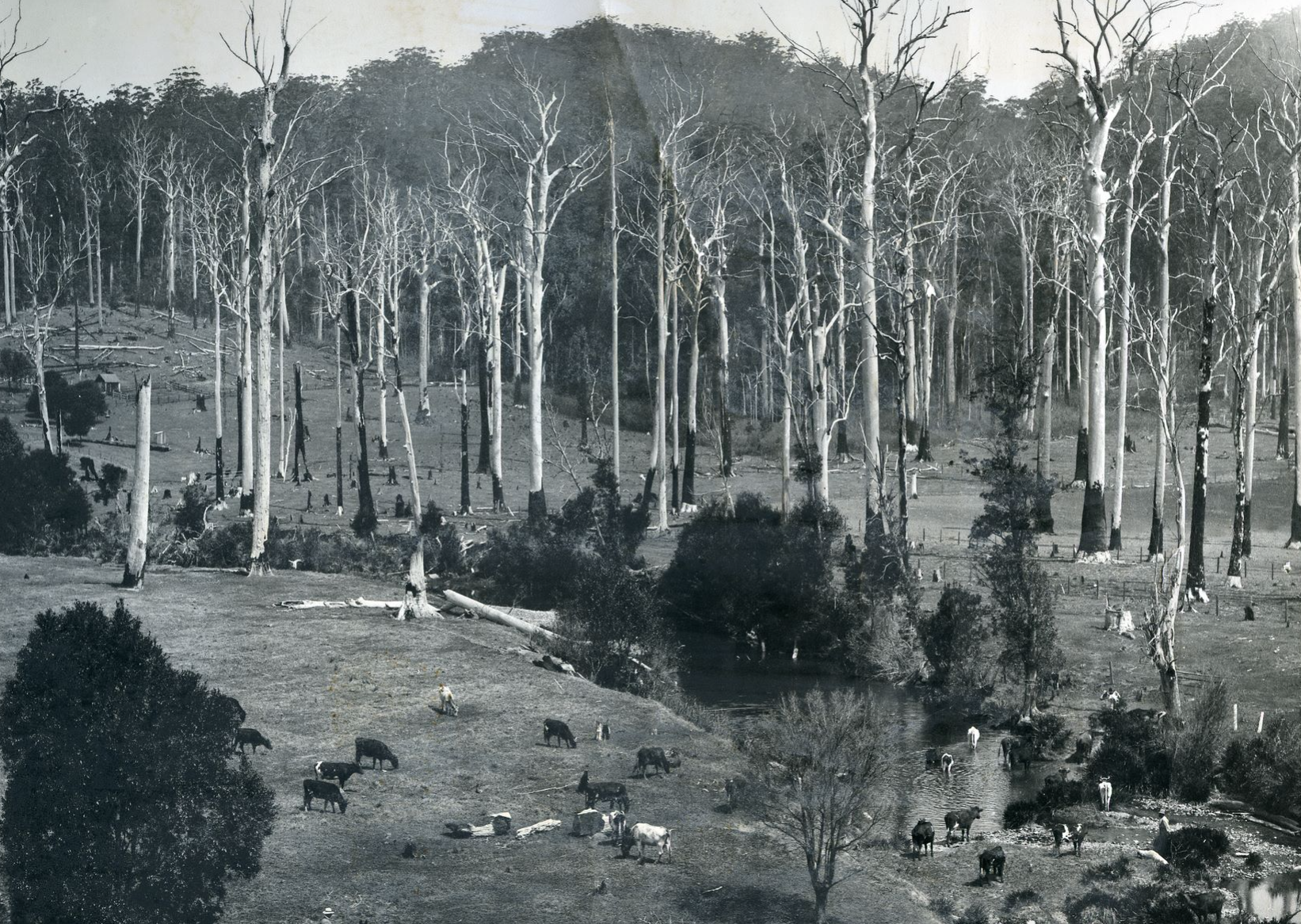
Life on the Upper Orara was harsh and lonesome. For seven years, Mary didn’t leave the bounds of the farm. She had no shoes, and her clothes had worn down to patches. She missed the grand opening of the Coffs Harbour jetty—an event that marked progress for the region—not because she didn’t want to go, but because she had nothing decent to wear.
Yet amid the toil, there was quiet companionship. Every Monday, Mary joined other women at the creek. There, they boiled clothes in kerosene tins, strung them on vines between trees, and took turns watching the children while gossip flowed like the water beside them. In addition to the washing, it was their only social outing, their only relief from solitude.
Washing took one full day. Ironing, with heavy flat irons heated over the wood stove, took another. Clothes were sewn by hand and dyed with onion skins and bark. Each baby came without a doctor—just the steady hands of Granny Manson or Granny Davis, volunteer midwives who answered midnight calls through mud and rain. Mary would later take on midwife duties, assisting other women in the valley as well, each child was met with the same calm acceptance: this is what life was.
Once, when they finally took a long-dreamed-of holiday to the coast, one of her sons broke his leg before the horse gear was even unpacked. The holiday ended with a return home and months of nursing.
But Mary’s spirit never wavered. She made bread, kept bees for wax candles, and saw her children grow into the land they had claimed. There were no doctors, no bakers, no tailors—but there was life, and love, and strength in every hand-stitched shirt and every flooded night survived.

By the end of the century, with the introduction of dairy farming, the family had prospered. Mary Ann Hoschke died in 1923 at the age of 76. But her legacy was etched not in stone, but in the stories of those who came after, in the homes that stood dry and firm on higher ground, and in the knowledge that once, a woman named Mary carved a life from the wild with little more than grit and grace.
The above is based on notes from –
- Reuben Matten
- Peg Woodruff
- Geroge England
- George Hoschke
- Frank Hoschke
- Annie Hoschke.
Discover more from Hoschke Family in Australia
Subscribe to get the latest posts sent to your email.

Pingback: June 2025 Newsletter | Hoschke Family in Australia