Hi cousins,
This month we are going further back than ever before, I know we said that last month and maybe the month before, but this month we are looking at the Indigenous connection to the Orara Valley and Coffs Harbour area, an enduring connection for thousands of years. The Orara Valley was cared for for many generations before European Settlement.
🍃 The Valley Before Us
🛣️ The Coffs Harbour Bypass
📸 Photo of the Month
🏠 European History of the Orara Valley
The Valley Before Us: Gumbaynggirr History and Living Culture
We acknowledge the Traditional Custodians of the Gumbaynggirr Nation, whose land we gratefully share, and pay we our respects to Elders past, present and emerging.
This year, we mark 140 years since Amandus and Mary Ann Hoschke brought their family to Upper Orara in 1886. Their arrival began our family’s connection with the valley. For the Gumbaynggirr people, the Traditional Custodians, that connection already extended back thousands of years and continues today.
Learning about this deeper history adds another dimension to the places familiar to our family: the Orara River, the forested hills, the creeks and the country around Upper Orara, Karangi, Coramba and Nana Glen.
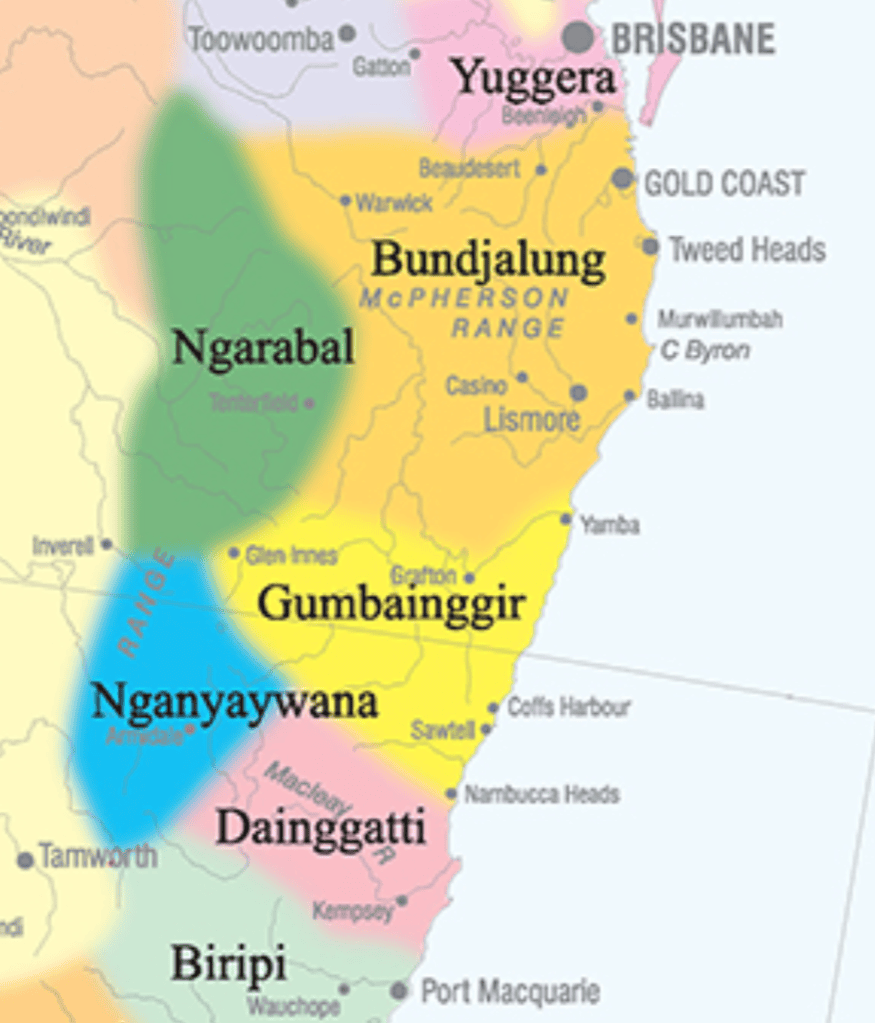
The Orara Valley forms part of Gumbaynggirr Country, which extends broadly from the Nambucca River in the south towards the Clarence River in the north, and inland to the Northern Tablelands. Within this wider Country, communities maintained their own connections, knowledge and responsibilities to particular places. You can explore more about the language and its regional varieties through Muurrbay Aboriginal Language and Culture Co-operative.
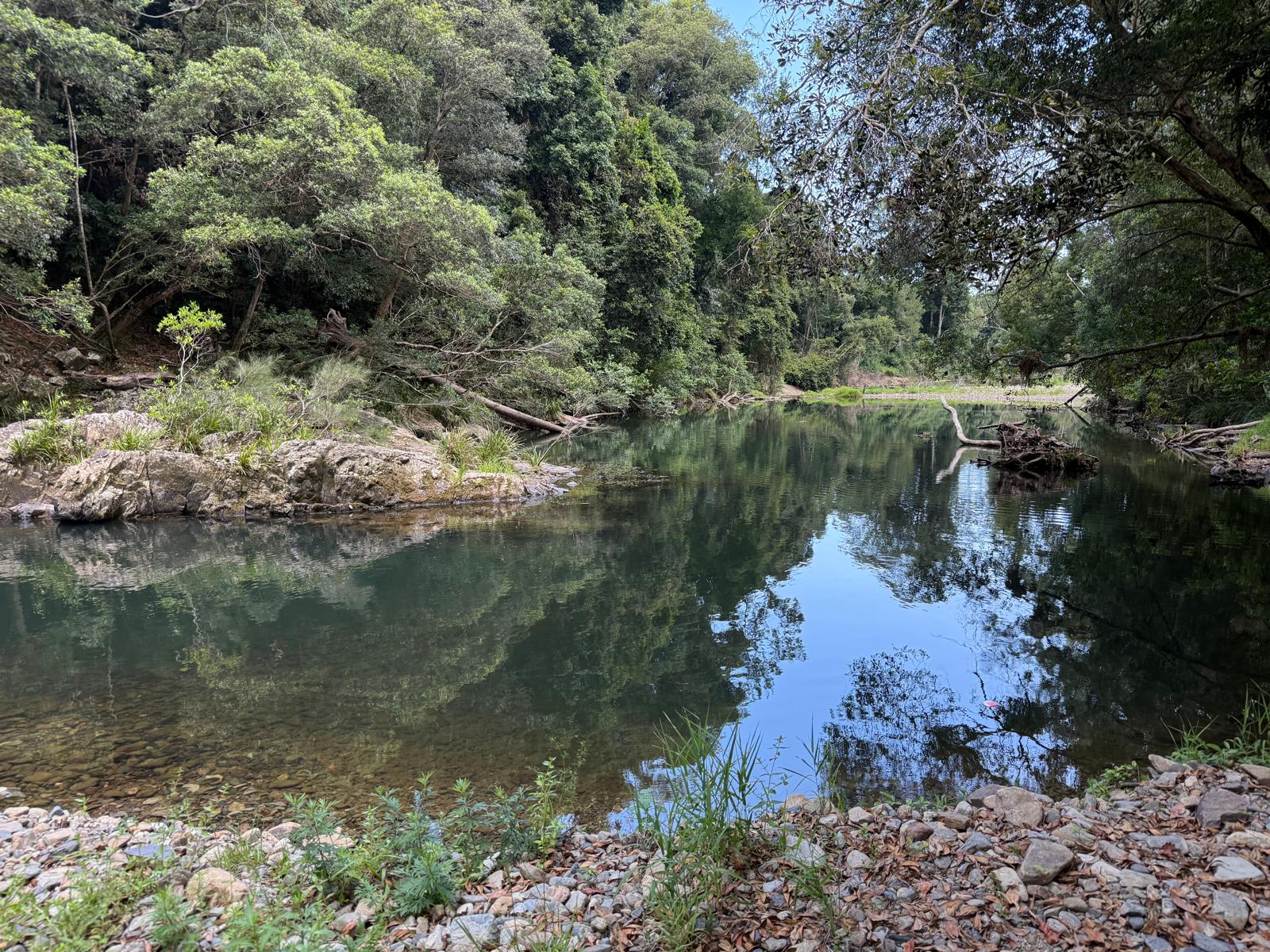
The valley’s waterways provided food and places to camp, while the surrounding forests supported a rich variety of plants and animals. The City of Coffs Harbour’s Orara River history describes the valley as a rich resource area with important cultural places along its rivers and creeks, in fact it identifies “Orara” with the Gumbaynggirr word Yuraara, meaning “place of food”, reflecting the valley’s rich natural resources. coffsharbour.nsw.gov.au
Across the wider region, people travelled between the coast and ranges according to seasonal resources, following routes through the landscape. These movements connected places and communities through detailed knowledge of Country.
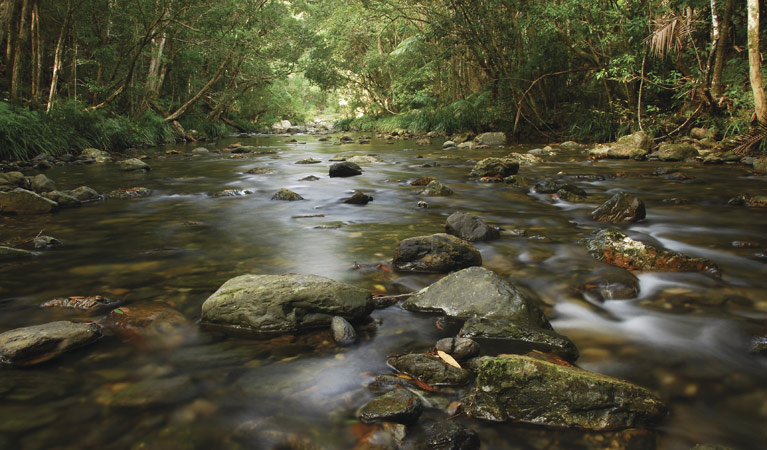
Evidence of that long relationship remains in the upper catchment. NSW National Parks’ history of Bindarri National Park identifies places associated with camping, tool-making, ceremonies and Dreaming stories. The park’s name comes from the Gumbaynggirr word Bindarray, which National Parks translates as “many creeks”. The forests and waterfalls we admire today are also a cultural landscape.
European timber cutting and farming brought profound changes. As land was allocated to settlers and fences, farms and houses spread, Gumbaynggirr people faced increasing restrictions on travelling between their customary places. Council’s regional history, Yandaarra: Shifting Camp Together, records dispossession and the movement of many people onto missions and reserves.
Remembering the effort involved in establishing our ancestors’ farms also means recognising the consequences of settlement for the people already living here.
Gumbaynggirr history continues today through families, cultural knowledge, language and community leadership.

In 1986, a century after the Hoschkes arrived at Upper Orara, Gumbaynggirr Elders—including Aunty Maggie Morris—came together to revitalise their language with linguist Brother Steve Morelli. As Muurrbay recounts in its own history, Elders shared their knowledge and listened to earlier recordings, developing resources to support future speakers. Classes began in 1997, and learners went on to become teachers themselves.
Another milestone followed in 2022, with the opening of Gumbaynggirr Giingana Freedom School in Coffs Harbour. Now known as Maam Giingana Gumbaynggirr School, it became NSW’s first bilingual school of an Aboriginal language, placing Gumbaynggirr language, culture and identity at the centre of education.
We can also learn through Yarrawarra Aboriginal Cultural Centre, established by Gaabi and Bagawa Elders in 1987, and the cultural and educational programs of Bularri Muurlay Nyanggan Aboriginal Corporation.
As we preserve the Hoschke family’s stories, we can also make room to learn the longer story of the valley we call home. Our 140-year connection is one chapter in a place whose history—and living culture—reaches much much further.
Coffs Harbour Bypass
In celebrating the changes we have experienced, if you have not been ‘home’ for some time, you will be very surprised to know the Coffs Harbour Bypass, which has been spoken of for many decades is actually close to completion!
This will clear the last bottleneck and traffic lights between Melbourne and the Queensland border and will change the landscape of Coffs Harbour once again, seems the only thing constant is change. Enjoy this fly-through and the map below so you don’t get lost next time you visit!
Photo of the Month
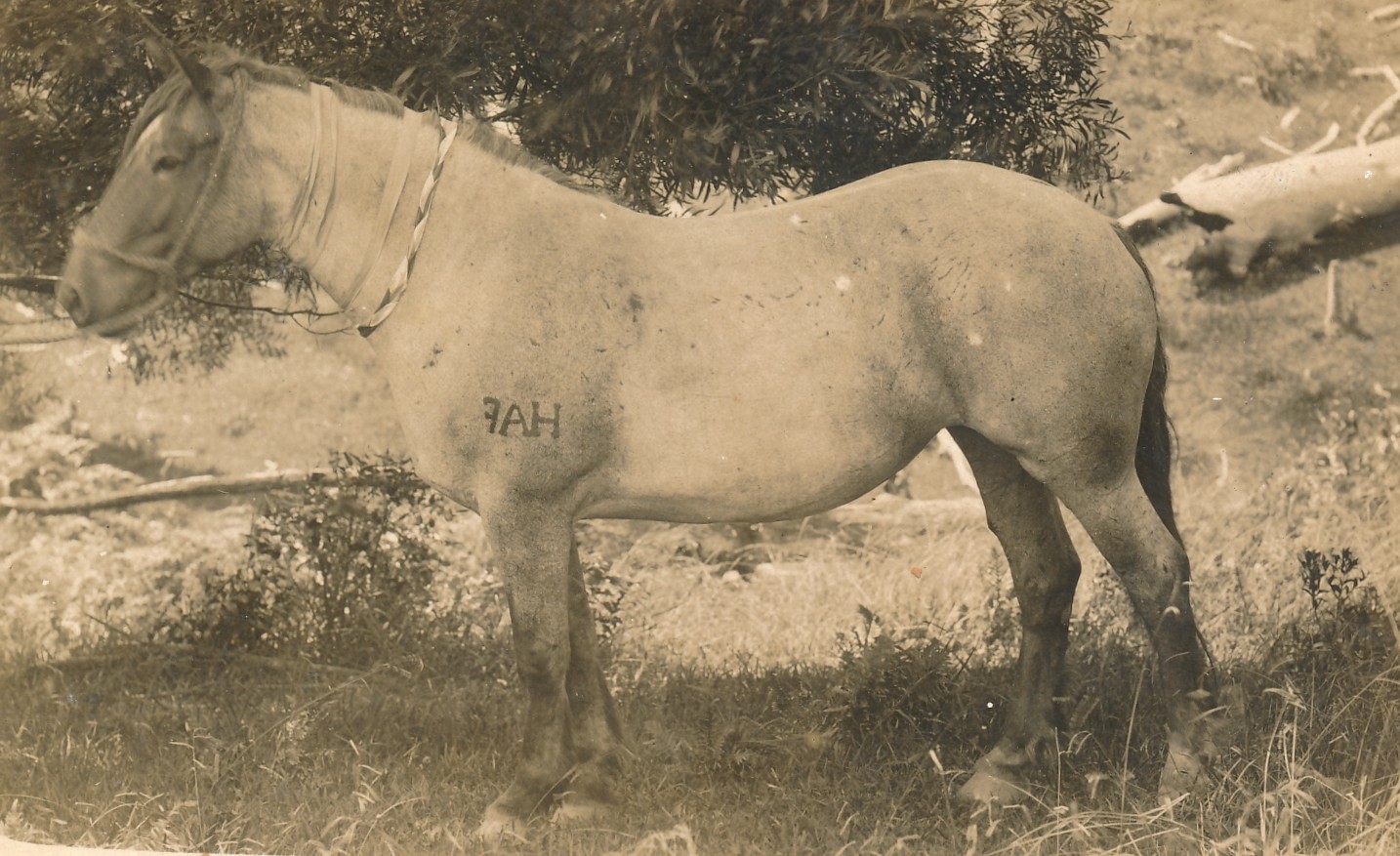
Fred Hoschke’s horse Violet. Note the brand with the ‘F’ reversed. This may have been to avoid confusion with a brand belonging to Frank Hoschke who, being older, would have had an earlier brand made.
European History of the Orara Valley
2026 marks 140 years since the Hoschke family arrived at Upper Orara in 1886.
Before the 1850s — Gumbaynggirr Country
As we described above the valley’s history stretches far beyond European settlement. The Orara River, its tributaries and surrounding forests are part of Gumbaynggirr Country, with enduring cultural connections. Council’s river history identifies “Orara” with the Gumbaynggirr word Yuraara, meaning “place of food”, reflecting the valley’s rich natural resources. coffsharbour.nsw.gov.au
1850–1859 — Cedar draws timber workers into the valley
Timber workers sought valuable red cedar in the forests around the Orara. Getting timber to market was difficult: logs were transported along rivers or hauled towards the coast. This began a long period in which timber cutting and transport shaped the district’s economy and tracks. coffscoast.com.au
1860–1869 — A landscape still difficult to reach
European access remained limited. Timber extraction depended on bush tracks, bullock teams and suitable river conditions. David Small’s later account describes cedar being floated down the Orara towards Grafton during floods, before a practical wagon route across the coastal range to Coffs Harbour was developed. His recollections describe a gradual process rather than a single road-opening date. Hoschke Family in Australia
1870–1879 — Timber tracks open access
Cedar workers pushed farther into the valley; council’s history places their arrival at Coramba in 1875. Their routes made more of the country accessible to prospective farmers, although the forested landscape remained difficult to travel through. coffsharbour.nsw.gov.au
1880–1889 — The Hoschkes arrive
David Small recorded that the Upper Orara land release opened for conditional purchase on 22 July 1886, naming A. Hoschke among the eight applicants that day.
Families cleared land, built homes and attempted to establish productive farms. Timber work and maize growing helped support them, while poor transport made selling produce difficult. Progress associations began pressing for roads and services. The Hoschkes were becoming part of a small, interdependent farming community. Hoschke Family in Australia
1890–1899 — Schools, shipping and new opportunities
Upper Orara’s school began in 1891, initially known as Dunvegan. Early teachers boarded with the Hoschke family—a personal connection between the family and the district’s educational beginnings. Hoschke Family in Australia
The opening of Coffs Harbour Jetty in August 1892 improved the coastal district’s shipping facilities. Meanwhile, gold mining around Coramba added demand for food, accommodation and services, and helped the township develop. Our stories
1900–1909 — Dairying becomes established
Coramba’s butter factory opened in 1901, and dairying became a major valley industry. It provided a commercial use for cleared river flats and linked surrounding farms through cream collection and processing.
Local government also took shape: Dorrigo Shire was formed in 1906, with Coramba serving as its headquarters for a time. coffscoast.com.au
For the Hoschkes, the decade included Amandus’ 1909 journey to Germany. The illuminated address presented to him that year, now in the local museum collection, records the community’s regard for him. Our stories
1910–1919 — Community growth and the First World War
Coramba’s council chambers were built in 1914, reflecting the village’s administrative importance. coffscoast.com.au
The First World War brought service and loss to valley families. Australian War Memorial records identify men associated with Coramba among those who died, including Reginald Arthur James Wilkins and Arnold Oscar Kerr. These individual records offer a way to tell the war’s local story through people rather than national events alone. Australian War Memorial
1920–1929 — Railway connections transform transport
The railway reached Coramba in 1922, and the Glenreagh–Dorrigo branch opened in 1924. These connections improved access for passengers and produce. A larger Coramba butter factory followed in 1925. coffscoast.com.au
The branch line also became part of social life: its history recalls trips to the Dorrigo Show and Christmas excursions towards the coast. Tallowood Mountain Rail Trail
1930–1939 — Electric lights and community gatherings
A particularly good newsletter detail comes from December 1934, when a grand ball celebrated the switching on of electric lights at Upper Orara Hall. Annie Hoschke performed the official switching-on ceremony. This documents electricity at the hall; it does not establish when every valley home received power.
School activities, dances and Empire Day celebrations continued to bring residents together. In 1936, fireworks were held on Annie’s property, followed by a concert and social at the hall. Hoschke Family in Australia
1940–1949 — War and a productive farming district
During the Second World War, the Glenreagh–Dorrigo railway carried troops to an army base at Lowanna, connecting the wider valley with wartime activity. Tallowood Mountain Rail Trail
A retrospective account published in 1947 described Upper Orara as a productive district with dairy herds, banana plantations, market vegetables and continuing timber work. It also recorded widespread use of milking machines, electricity and telephones—a considerable change from the isolation of the 1880s. Hoschke Family in Australia
1950–1959 — Changing services and community organisations
Coramba’s former butter factory changed hands in 1950 and was used for pickle production. The local Country Women’s Association branch formed in 1953, adding another organisation to village life. coffscoast.com.au
Passenger services on the Glenreagh–Dorrigo railway ended in 1957, although freight continued. Tallowood Mountain Rail Trail
1960–1969 — The dairy industry changes shape
The former Coramba butter factory served during the 1960s as a Peters Ice Cream milk receiving depot and bulk ice cream store. Its changing use provides a small but useful example of how local agricultural processing evolved. coffscoast.com.au
Flooding remained part of valley life. Your collected newspaper history records flooding in 1962 and severe weather in 1967, continuing a recurring theme across generations. Hoschke Family in Australia
1970–1979 — Railway freight ends; family connections continue
Washaways and landslides brought freight operations on the Glenreagh–Dorrigo branch to an end in 1972. This affected the branch line, while the main North Coast railway continued operating. Tallowood Mountain Rail Trail
For the Hoschke newsletter, the 1976 family reunion gives this decade a personal focus: descendants were maintaining their connections to one another and to the valley as the family spread farther afield. Hoschke Family in Australia
1980–1989 — Water storage and the settlement centenary
Karangi Dam was built in 1980, storing water pumped from the Orara River to supply Coffs Harbour and surrounding coastal communities. It was enlarged in 1988 as demand increased. City of Coffs Harbour
The 1986 settlement centenary also encouraged preservation of local history. Michael Secomb’s Red Gold to Green Grass, covering Upper Orara’s first century of European farming settlement, was published that year. nfhs.org.au
1990–1999 — Preserving history and repairing the river
Upper Orara School celebrated its centenary in 1991, with Margaret Hoschke editing From Dunvegan On. Hoschke Family in Australia
Karangi Dam was enlarged again in 1994. Local Landcare groups formed in 1996, followed by an umbrella Rivercare committee in 1998, addressing erosion, weeds and river degradation. City of Coffs Harbour
2000–2009 — New infrastructure and continuing river restoration
A new Coramba Bridge opened on 3 May 2003, replacing the older crossing’s transport role. coffscoast.com.au
River rehabilitation continued through partnerships between landholders, community groups and government bodies. Council’s project booklet records environmental levy support from 1997 and catchment-management funding from 2004. coffsharbour.nsw.gov.au
2010–2019 — Heritage, community life and bushfire
The old timber Coramba bridge was demolished in 2010, illustrating the challenge of retaining historic structures as infrastructure changed. coffscoast.com.au
The decade ended with the 2019 bushfires, including the Liberation Trail fire, which threatened homes and businesses in the Orara Valley. Recovery became a major community undertaking. Have Your Say Coffs Harbour
2020–2026 — Recovery and planning for the next generation
Bushfire recovery projects supported community facilities, environmental restoration and local connections. Flooding also remained a concern; our family website’s flood history records 358 mm over two days at the Hoschke farm in 2025. News Of The Area
In 2026, council exhibited a draft Orara River Rehabilitation Strategy 2026–2036, continuing the work of protecting waterways, reducing erosion and supporting landholders. Have Your Say Coffs Harbour
Til next time,
Kylie & Ian
