Welcome!
Welcome to our October 2025 newsletter!
🌺 Jessie Caroline Hoschke
🌸 Mary’s gift to Jessie: The Royal Path of Life
📰 Apology
📸 Photo of the Month
✨ Coffs Collections
📅 This Month in History
Article of the Month
Jessie Caroline Hoschke
Many thanks to Pat & Darrell Davis for the information below on Jessie Caroline Hoschke.
Jessie Caroline Hoschke was born at Georges Plains (near Bathurst), New South Wales, on 24 December 1875, the fourth child and first daughter of Amandus August Ludwig Hoschke and Mary Ann (Drew) Hoschke. As a young woman she travelled with her family from the Bathurst area to the Clarence/Orara district — later recalling the journey from Grafton to the Upper Orara on foot behind a bullock wagon — becoming part of a pioneering household in a new settlement.
At age 20 Jessie married George Davis (then about 27) on 21 September 1896. The couple began married life in the Upper Orara / Bucca Creek area where George worked in storekeeping (initially for his brother-in-law, James Marles) and later on farms.
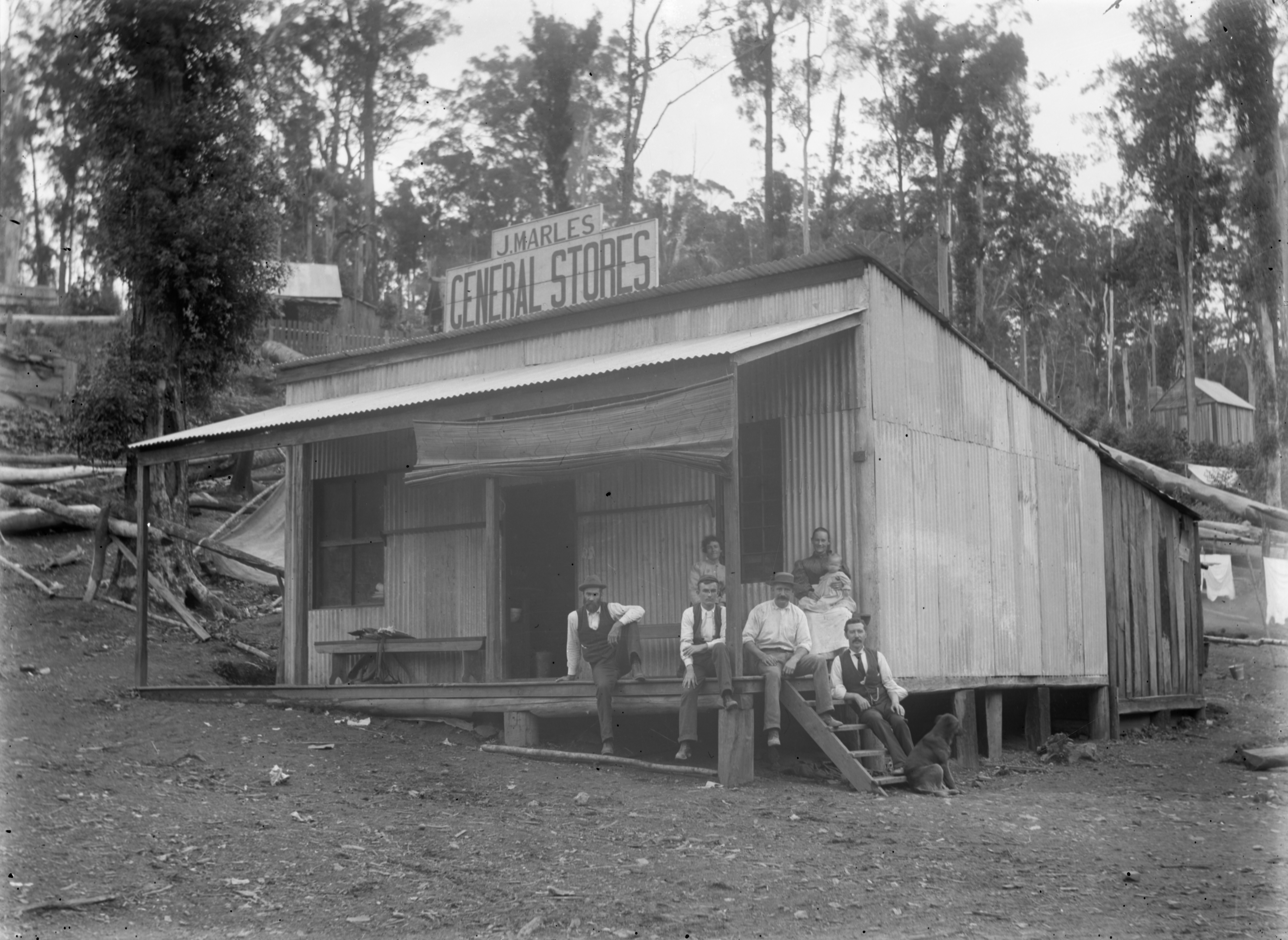
Jessie and George raised their family on land George selected at Friday Creek: he and his brother Charles cleared the property and established a home there where Jessie lived for many years.
Jessie and George had eight children: James Clarence (b. 1897), Allan Frank (b. 1898), Herbert “Bert” Bruce (b. 1900), Ada Mary (b. 1902), Nellie Edith (b. 1904), Arthur George (b. 1908), Edward “Ted” Norman (b. 1911), and Jessie Norma (b. 1917 at Coffs Harbour). The births of several of these children were delivered with the help of grandmothers Rachael Davis and Mary Ann Hoschke — a reminder of how extended family supported pioneer households.
Tragedy struck in 1923 when George Davis died of stomach cancer at Friday Creek on 11 February. Jessie remained on the Friday Creek property with her children for many years after his death; records and family notes show the family continued farming and living in the Orara district into the late 1930s. Eventually the Friday Creek property was sold (in 1940 it passed to their daughter Nell and son-in-law, and later to larger commercial interests).
In 1940 Jessie and several of her children moved to Upper Copmanhurst. Family arrangements there involved siblings Allan, Ted and Jessie (one of her sons) purchasing a farm; later transfers and marriages resulted in Ada and Allan taking over holdings and Ada buying a home in Ryan Street, South Grafton in 1964 — a house into which Jessie moved and where she spent her final decades.
Jessie was long lived: she celebrated her 90th birthday in December 1965 and was remembered as a woman with a practical motto — “Do what you can with what you have and don’t waste time worrying over what you haven’t got.” She enjoyed visiting friends and kept strong ties to her extended Hoschke family; by the mid-1960s she had many grandchildren and great-grandchildren. Jessie died at Grafton Base Hospital on 29 September 1969 and was buried at Clarence Lawn Cemetery, South Grafton.

Mary’s gift to Jessie: The Royal Path of Life
On the occasion of Jessie Hoschke’s marriage to George Davis, her mother Mary gifted her a book, which has been generously shared with us by Pat & Darrell Davis. The Royal Path of Life was originally published in 1876 with the byline “Aims and Aids to Success and Happiness.”
Late 19th-century was a period of industrial expansion, social reform, and moral/religious movements. Literature on self-improvement, character building, success, and “conduct of life” was popular.

Books like this would have been part of a broader genre emphasising Christian morals, personal discipline, and practical advice on virtue. The book is around 600 pages and was popular enough to have several reprints, both in America and the UK.

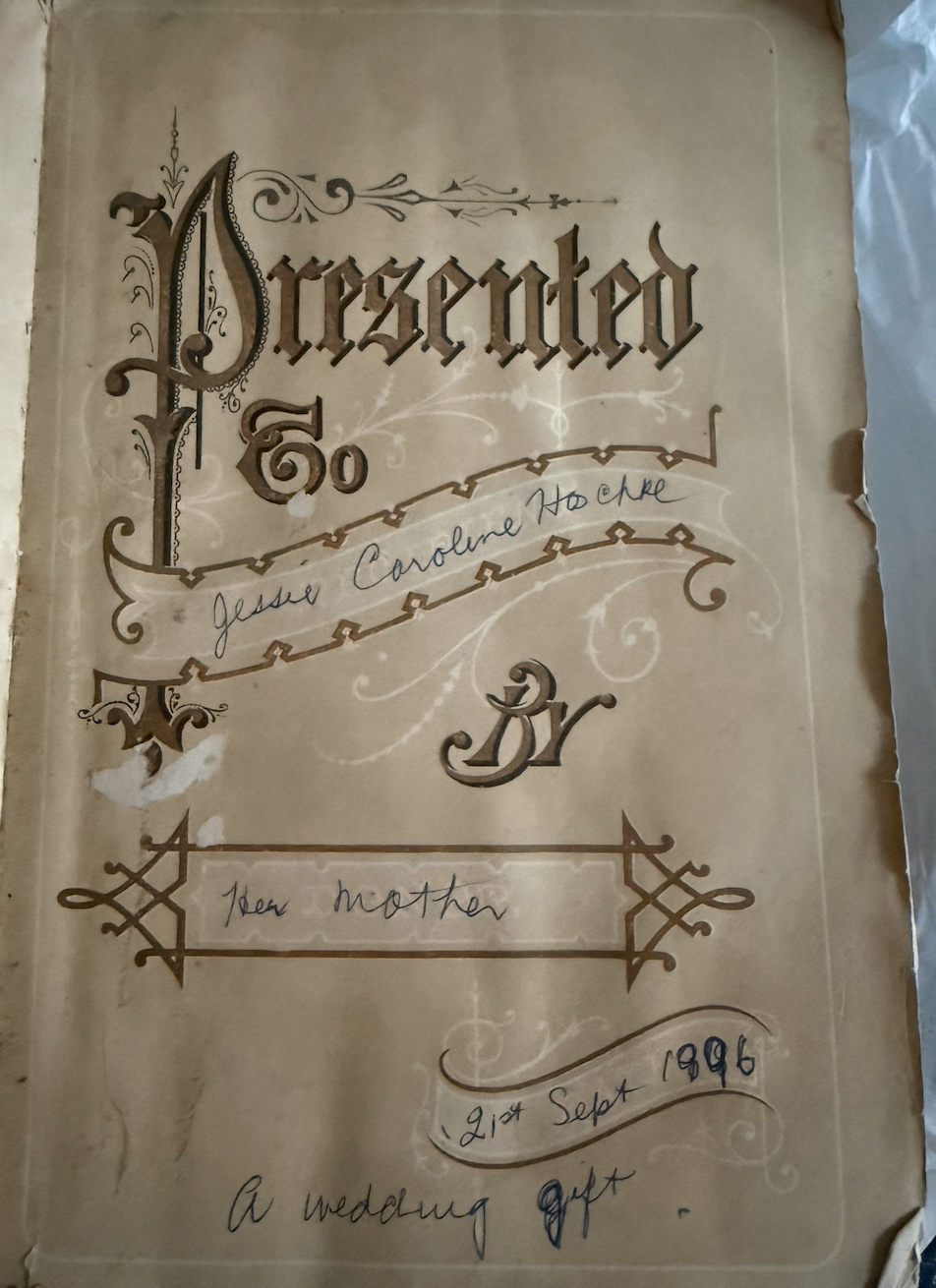
On children, “Never scold children, but soberly and quietly reprove. Do not employ shame except in extreme cases. The suffering is acute; it hurts self-respect in the child to reprove a child before the family; to ridicule it, to tread down its feelings ruthlessly, is to wake in its bosom malignant feelings. A child is defenseless; he is not allowed to argue.
They will not trouble you long. Children grow up nothing on earth grows so fast as children. It was but yesterday, and that lad was playing with tops, a buoyant boy. He is a man, and gone now! There is no more childhood for him or for us. Life has claimed him. When a beginning is made, it is like a ravelling stocking; stitch by stitch gives way till all are gone.”
If you are keen for some more late 19th century wisdom, this book is available to read for free on Google books via the link below.
The Royal Path of Life “Aims and Aids to Success and Happiness.”
Apology
I would like to apologise for the lateness of this month’s newsletter due to a variety of factors. I have also been working on a children’s e-book about Amandus, which I hope to have finished by Christmas. This website and newsletter is a labour of love that both Ian and I fit amongst other parts of our life, as always we welcome input from others as well, this month we have been generously assisted by Pat & Darrell Davis who have shared information on Jessie and her life.
I have also not been able to maintain the on this day posts on Facebook this month, I have been working on the graphics and will upload them to each person’s page here and will continue to list the on this day commemorations here in our newsletter.
Thanks, Kyles
Photo of the Month
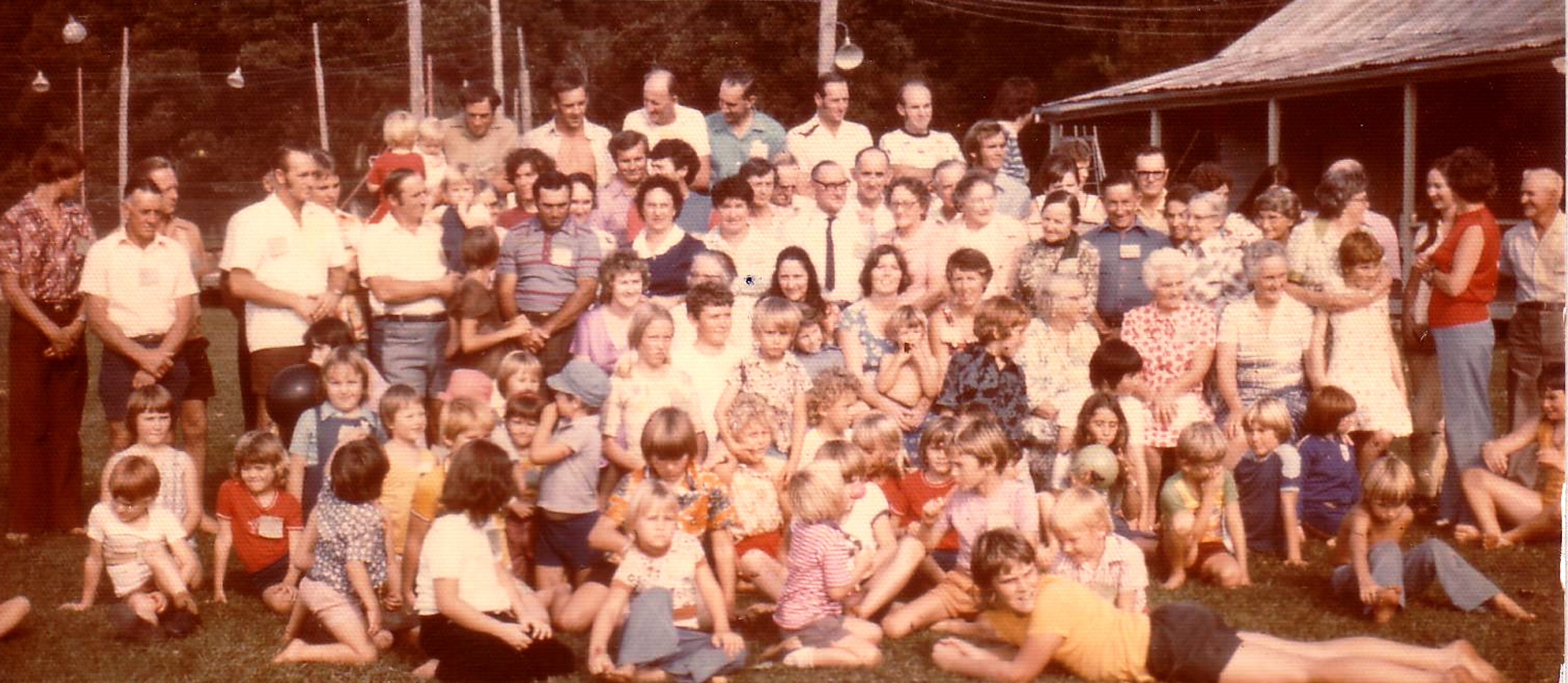
Do you recognise yourself in this photo? Drop us a line as we’d love to be able to list all of the names in this awesome photo!
This Month in History
During October, we remember these family members with love:
2 Oct – George William Hoschke & Ruthetta Manson married in 1901
2 Oct – Harold Robert Hoschke passed away in 1958
3 Oct – Jessie Norma Davis born in 1917
5 Oct – Colin James Black Hoschke born in 1916
5 Oct – Edith Elizabeth Mary Tait born in 1914
8 Oct – Melbourne Malcolm McPhail born in 1902
8 Oct – William Frederick “Bill” Hoschke born in 1910
13 Oct – August Frank Hoschke born in 1872
17 Oct – Allan Frank Davis born in 1898
18 Oct – Robert Burdett Smith Ide born in 1885
23 Oct – Edith Elizabeth Mary Finucane (nee Tait) passed away in 1946
24 Oct – Joyce Merle Ide nee Stennett passed away in 1990
25 Oct – Jean Isabell Hoschke nee Graham passed away in 1999
28 Oct – Joyce Merle Ide nee Stennett born in 1917
30 Oct – Edna “Teddie” Hoschke née Jones born in 1915
Til next month!
